

Nonprofit Guide to IRS Form 990
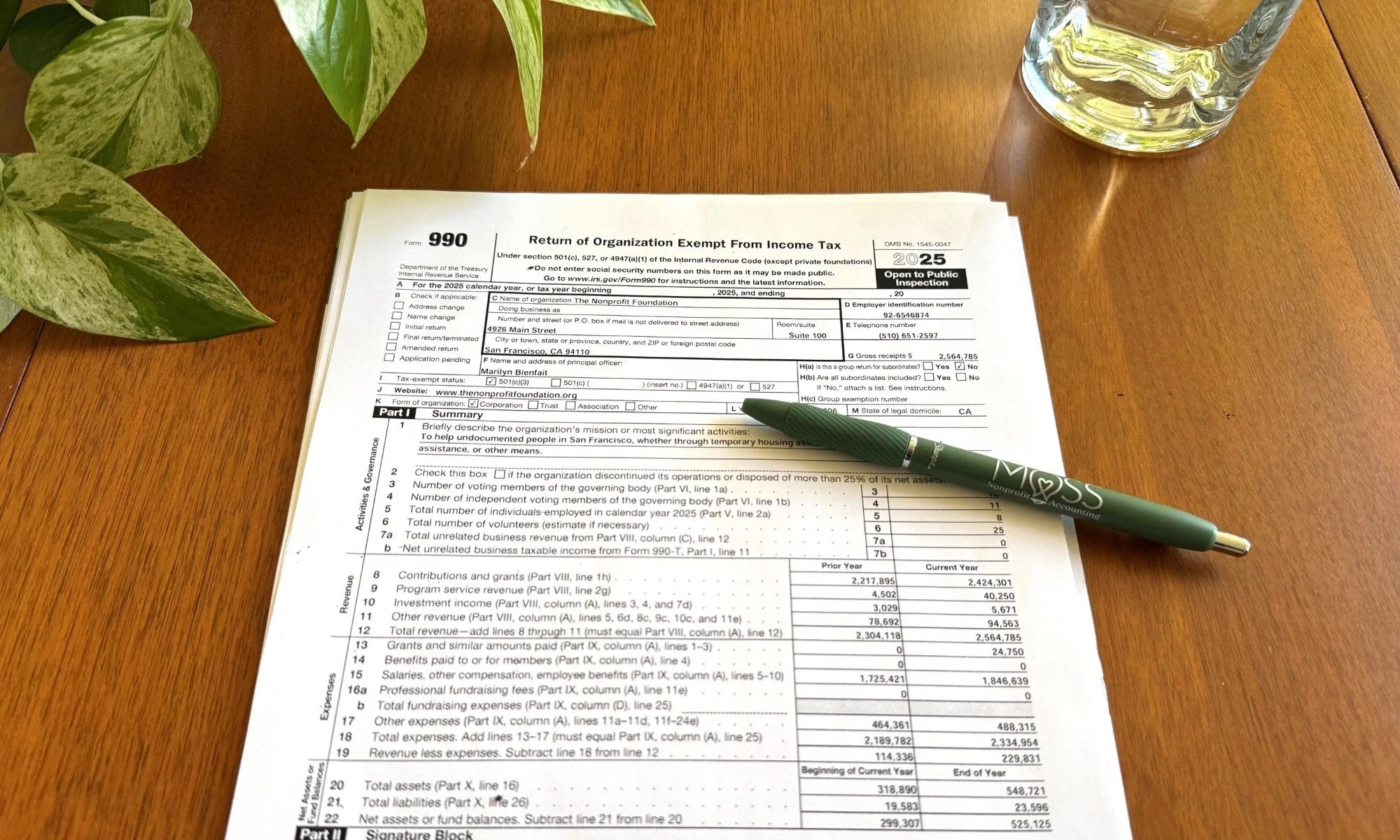
Nonprofits in the United States have to file several forms each year to maintain compliance with government agencies. Form 990 is an important piece of those annual filing requirements and one that can be difficult to understand and fulfill.
In this post, we’ll cover frequently asked questions about Form 990, including the different versions of Form 990, as well as everything else nonprofits need to know to maintain compliance with the IRS’ annual reporting requirements.
Table of Contents
What is Form 990?
Form 990 is the annual informational return that most nonprofit organizations are required to file with the IRS each year. Form 990 provides an overview of a nonprofit’s assets, liabilities, income, and expenses, and is used by the IRS to ensure that nonprofits comply with the law by disclosing certain financial activities.
Who Must File Form 990?
Most nonprofits must file some variation of Form 990 each year. Some religious nonprofit organizations (like churches) are exempt from Form 990 filing requirements. The board members of a nonprofit organization are responsible for reviewing Form 990 and ensuring that it is filed each year.
If your nonprofit is struggling to file Form 990 on your own, Moss Nonprofit Accounting can help.
Receive a free consultation and quote today!
Why is Form 990 Important?
Form 990 provides transparency into a nonprofit’s finances. It is often used by potential donors to evaluate whether an organization is deserving of funds. Nonprofit organizations should think of Form 990 as a marketing document in addition to a governmental filing; all of the information on Form 990 (except Schedule B, the list of donors) is public and can be used to the benefit or the detriment of the organization.
When is Form 990 Due?
Form 990 is due four and a half months after the end of an organization’s fiscal year. Nonprofit organizations that file a federal extension for Form 990 (Form 8868) receive an additional six months to file. Find your nonprofit’s fiscal year and 990 due dates in the table below.
Form 990 Due Dates
| Fiscal Year | Due Date | Extended Due Date |
|---|---|---|
| Jan 1-Dec 31 *Most Common! | May 15 | Nov 15 |
| Feb 1-Jan 31 | June 15 | Dec 15 |
| Mar 1-Feb 28 | July 15 | Jan 15 |
| Apr 1-Mar 31 | Aug 15 | Feb 15 |
| May 1-Apr 30 | Sept 15 | Mar 15 |
| Jun 1-May 31 | Oct 15 | Apr 15 |
| Jul 1-Jun 30 *Very Common! | Nov 15 | May 15 |
| Aug 1-Jul 31 | Dec 15 | Jun 15 |
| Sep 1-Aug 31 | Jan 15 | Jul 15 |
| Oct 1-Sep 30 | Feb 15 | Aug 15 |
| Nov 1-Oct 31 | Mar 15 | Sept 15 |
| Dec 1-Nov 30 | Apr 15 | Oct 15 |
What Happens if You Don’t File Form 990?
Organizations that fail to file Form 990 (or 990-N or 990-EZ) for three consecutive years will have their tax-exempt status revoked by the IRS.
Losing tax-exempt status means that an organization cannot accept tax-deductible donations, which can severely hamper a nonprofit’s operations. It also means that an organization is no longer recognized by the IRS as exempt from income taxes. Nonprofits that have their tax-exempt status revoked must file Form 1023 (or Form 1024, for non-charitable nonprofits) again to regain their tax-exempt status. The IRS may also require a revoked nonprofit to file missing informational returns for prior fiscal years.
If your nonprofit organization’s tax-exempt status has been revoked, we can help you reinstate it. Contact us now and get back on track!
Contact us for your complete roadmap to compliance!
Is There a Penalty for Filing Form 990 Late?
The IRS assesses penalties when nonprofits file Form 990 after the due date or the extended due date (if an extension was filed).
For nonprofit organizations with annual revenue of $1,208,500 or less that fail to file Form 990 on time, the IRS penalty is $20 per day, up to a maximum penalty of $12,000 or 5 percent of the organization's annual revenue (whichever is less).
For nonprofit organizations with annual revenue greater than $1,208,500 that fail to file Form 990 on time, the IRS penalty is $120 per day, up to a maximum penalty of $60,000.
If your organization has a good reason for failing to file Form 990 on time, you can request abatement of the penalty in the form of a letter that can be submitted to the IRS along with a paper copy of Form 990.
Do Nonprofits Pay Income Taxes?
To become a nonprofit, organizations apply for and receive exemption from federal and state income taxes; however, some nonprofits are subject to income taxes, depending on their activities and their compliance with nonprofit regulations and filings.
Nonprofits that have business income that is unrelated to their exempt activities must pay taxes on that income using Form 990-T. For example, a nonprofit hospital that operates a gift shop must file 990-T and pay taxes on the revenue generated from the gift shop, because that revenue is unrelated to the organization’s exempt purpose of being a hospital. Nonprofits that report unrelated business income on Form 990-T must also file Form 990 to report their exempt activities to the IRS.
Nonprofit corporations that have lost their tax-exempt status are subject to income taxes on all of their income; they should file Form 1120 with the IRS until they have reapplied for tax-exempt status.
What Are the Different Versions of Form 990?
There are five variations of Form 990 that nonprofits file, depending on their designation (private vs public) and size (in terms of assets and revenue). The table below explains the requirements for each version of Form 990.
Form 990 Versions and Requirements
| Form | Requirements |
|---|---|
| Form 990 | Full return filed by organizations with $200,000 or more in gross receipts and/or $500,000 or more in assets |
| Form 990-EZ | Short return filed by organizations with less than $200,000 in gross receipts and less than $500,000 in assets |
| Form 990-N | e-Postcard filed by organizations with gross receipts that are typically under $50,000 (determined by averaging gross receipts during the return year and two prior fiscal years) |
| Form 990-PF | Return filed by organizations that are designated as private foundations (instead of public charities) |
| Form 990-T | Return filed by nonprofits organizations with unrelated taxable income (filed in addition to Form 990) |
Is Form 990 Visible to the Public?
Form 990 is a public document in that the IRS requires nonprofits to make copies of their Form 990 available to the public upon request. After an organization files Form 990, it can be found in many online databases accessible to the public, including the IRS’ Tax Exempt Organization Search Tool, state charity registries (if applicable), and those run by organizations like ProPublica, Candid (GuideStar), and Charity Navigator.
How to File Form 990
Form 990-N
Nonprofits that qualify to file Form 990-N can do so for their most recent fiscal year using the IRS’ electronic filing system. Filing the 990-N ePostcard takes just a few minutes. Form 990-N can be filed only for the most recent fiscal year; organizations that are delinquent in filing their returns for prior fiscal years must file Form 990-EZ or Form 990 instead of Form 990-N for prior years.
Forms 990, 990-EZ, 990-PF, and 990-T
Nonprofits that file Forms 990, 990-EZ, 990-PF, and/or 990-T must do so electronically. Organizations that have simple operations, keep meticulous books and records, and are comfortable preparing these forms themselves can use online filing services like File990.org or Form990.org, which charge a small (or, in some cases, no fee) to file. Nonprofit organizations with complex operations or with less accounting expertise can hire a CPA or other tax preparer to help them file Form 990, Form 990-EZ, Form 990-PF, and Form 990-T.
Form 990 is markedly different from the tax returns that businesses and individuals file each year, and most CPAs and tax preparers don’t encounter it very often. Nonprofits that hire a professional to prepare Form 990 should ensure that whoever they hire has substantial experience in preparing nonprofit returns.
Moss Nonprofit Accounting has more than 25 years of experience in preparing Form 990 for nonprofit organizations. If your nonprofit wants an accurate, expertly prepared 990 that will professionally represent your organization in front of the IRS, your stakeholders, and the public, choose Moss Nonprofit Accounting.